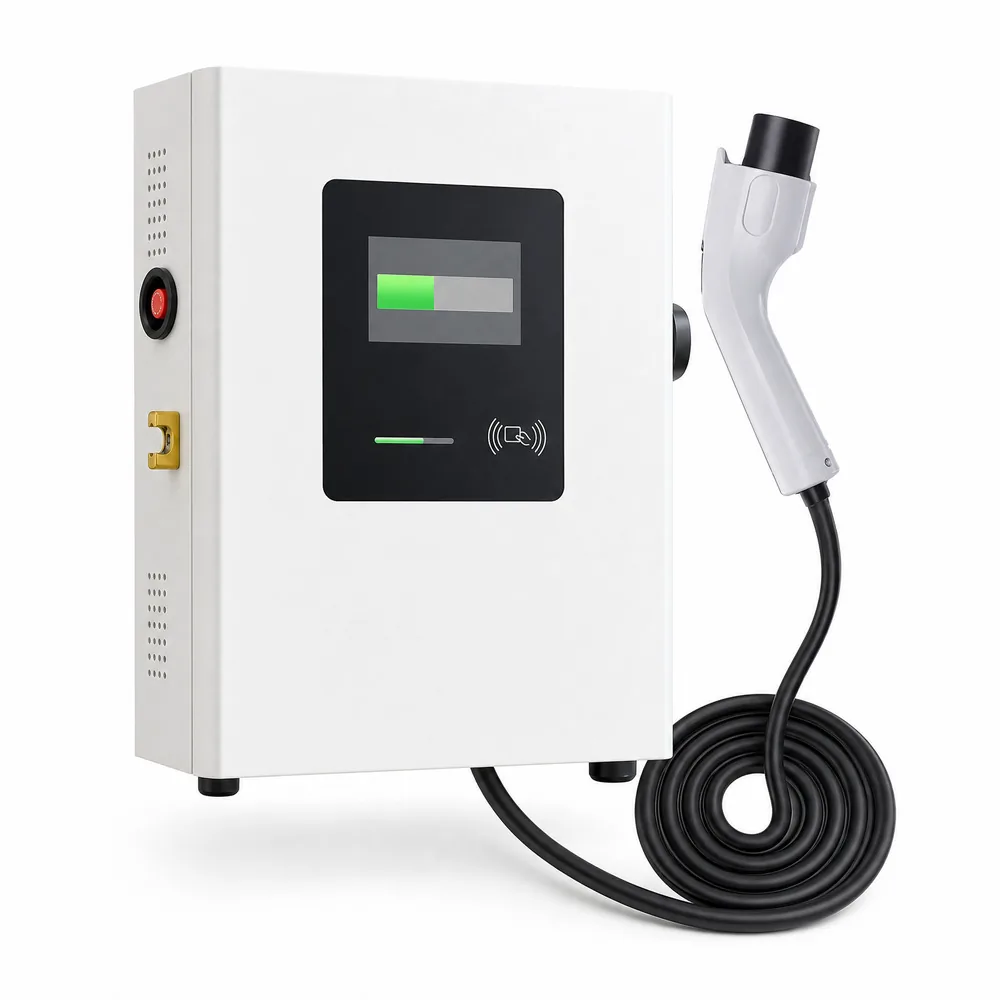
Level 2 AC Wallbox 7-22 kW
A wall-mounted AC charging station for home, workplace, hotel and fleet overnight charging. Available in single-phase 7.4 kW and three-phase 11 kW / 22 kW versions, with or without a fixed cable, and with Ethernet, Wi-Fi and 4G connectivity options.
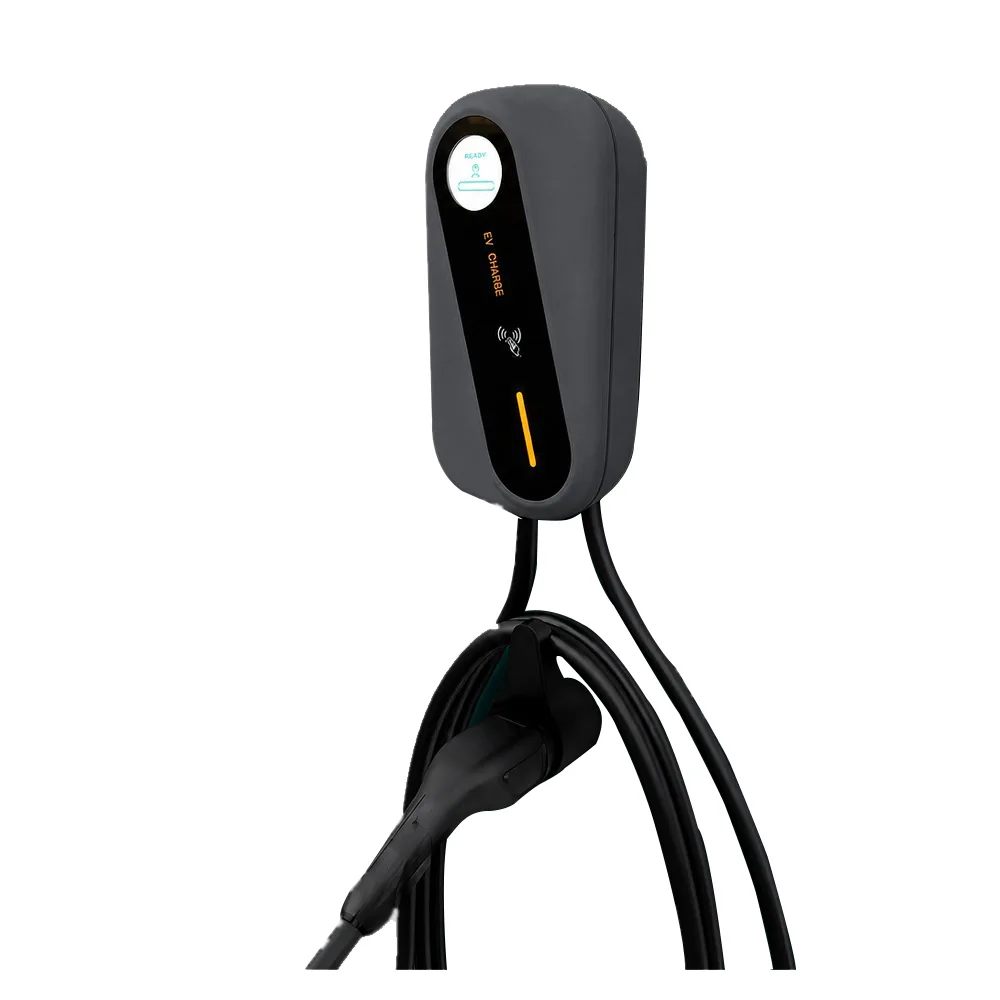
Key features
- Authorisation by RFID card, mobile app or plug-and-charge
- Integrated RCD type A with 6 mA DC leakage detection, avoiding a separate DC breaker
- Load balancing across multiple units on a single supply
- Optional 4G module for sites without fixed network cabling
- Scheduled charging and off-peak tariff windows set from the app
Configurable options
Technical specifications
Where this wallbox fits
An AC wallbox is the default choice wherever a car is parked for more than an hour. It uses the vehicle on-board charger, so the hardware is simpler and cheaper than DC, and the electrical supply is usually already present. The decisions that matter are single or three phase, socket or tethered cable, and whether the site needs networked control.
Home overnight charging
A 7.4 kW single-phase unit returns roughly 40-50 km of range per hour, which is a full battery overnight for most cars. Where a three-phase supply already exists, 11 kW or 22 kW shortens the window and leaves headroom for a second vehicle.
Workplace and staff parking
Cars are parked for the working day, so 11 kW per bay is generous and 7.4 kW is usually enough. Load management across a group of wallboxes is what keeps the site within its existing supply instead of triggering an upgrade.
Hotels, guest houses and holiday lets
A single networked unit covers guest charging without a dedicated operator. Access control by RFID or app, and a simple report of who charged when, is normally all the property needs to recover the electricity cost.
Fleet overnight depots
Vans return on a fixed schedule and charge unattended. The requirement shifts to robust cable management, scheduled sessions and a unit that survives being used every night for years rather than occasionally.
How to specify
- Confirm the supply first. 7.4 kW needs a 32 A single-phase circuit; 11 kW and 22 kW need 400 V three-phase, and 22 kW is only useful if the vehicle on-board charger accepts it.
- Choose between a Type 2 socket and a tethered cable. A socket keeps the unit cheaper and lets any driver use their own cable; a tethered cable is faster to plug in daily and is the usual choice for a private driveway.
- Decide whether the site needs OCPP. A single domestic unit can run standalone; workplaces, hotels and fleets usually want OCPP 1.6J so that access, tariffs and energy reporting sit in one platform.
- Check the residual current protection. An integrated type A RCD with 6 mA DC detection avoids a separate DC leakage device in the consumer unit, which simplifies the installation and the certificate.
Frequently asked questions
Do I need three-phase for 11 kW or 22 kW?
Yes. 11 kW and 22 kW are three-phase 400 V products, while 7.4 kW is single-phase 230 V. The wallbox cannot create a phase that is not present at the meter, and the vehicle also has to accept the higher rate: many cars are limited to 11 kW on AC regardless of what the charger can deliver.
Can one wallbox be shared between two cars?
A single unit charges one vehicle at a time. Two vehicles need either two wallboxes or a unit with load sharing across a group, which is why the networked models are specified for shared parking rather than the standalone domestic ones.
What maintenance does a wallbox need?
Very little beyond an annual visual check of the enclosure, cable and gun, and a firmware review if the unit is networked. The parts that wear are the cable, the gun and the contactor, all of which are replaceable without changing the whole unit.
Does the wallbox include DC leakage protection?
The integrated protection is type A plus 6 mA DC detection, which covers the requirement that otherwise needs a separate type B device upstream. Confirm the local wiring rules with your installer, as a few markets still ask for the device at the board.
Related products
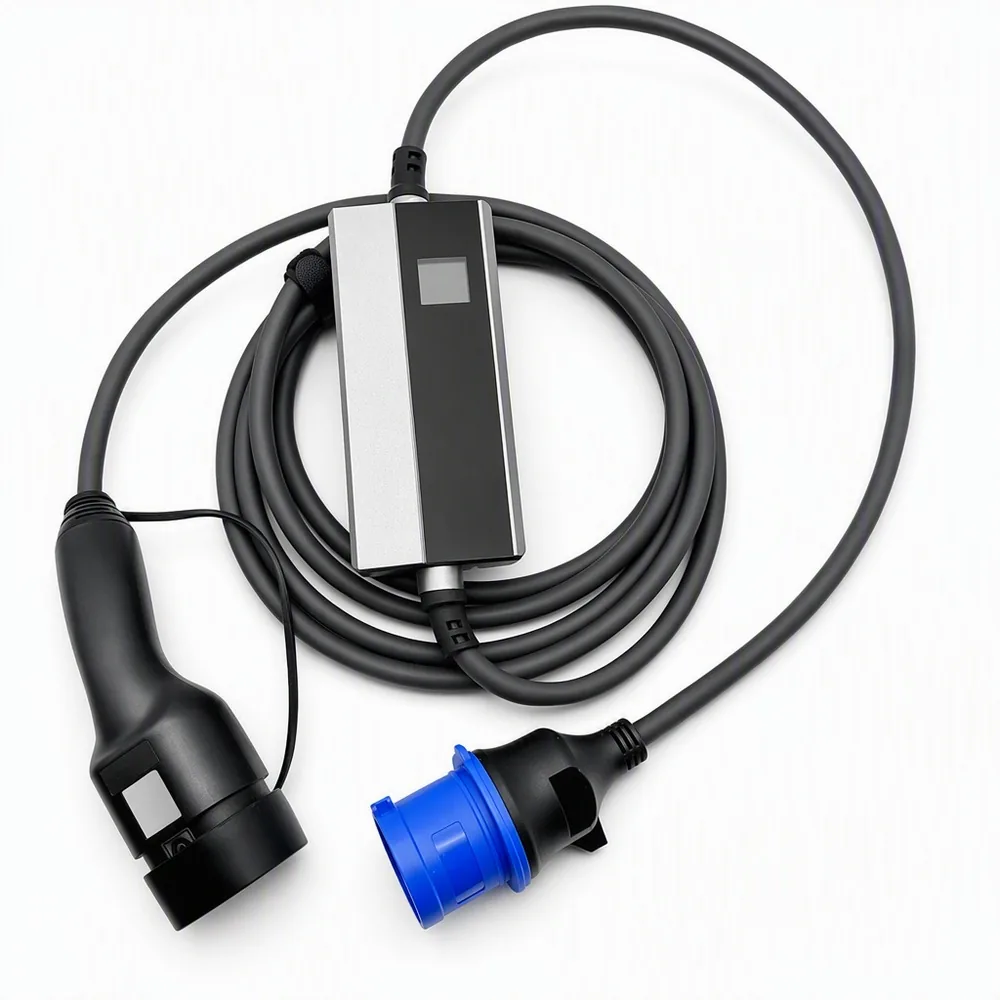
Portable Mode 2 Charger
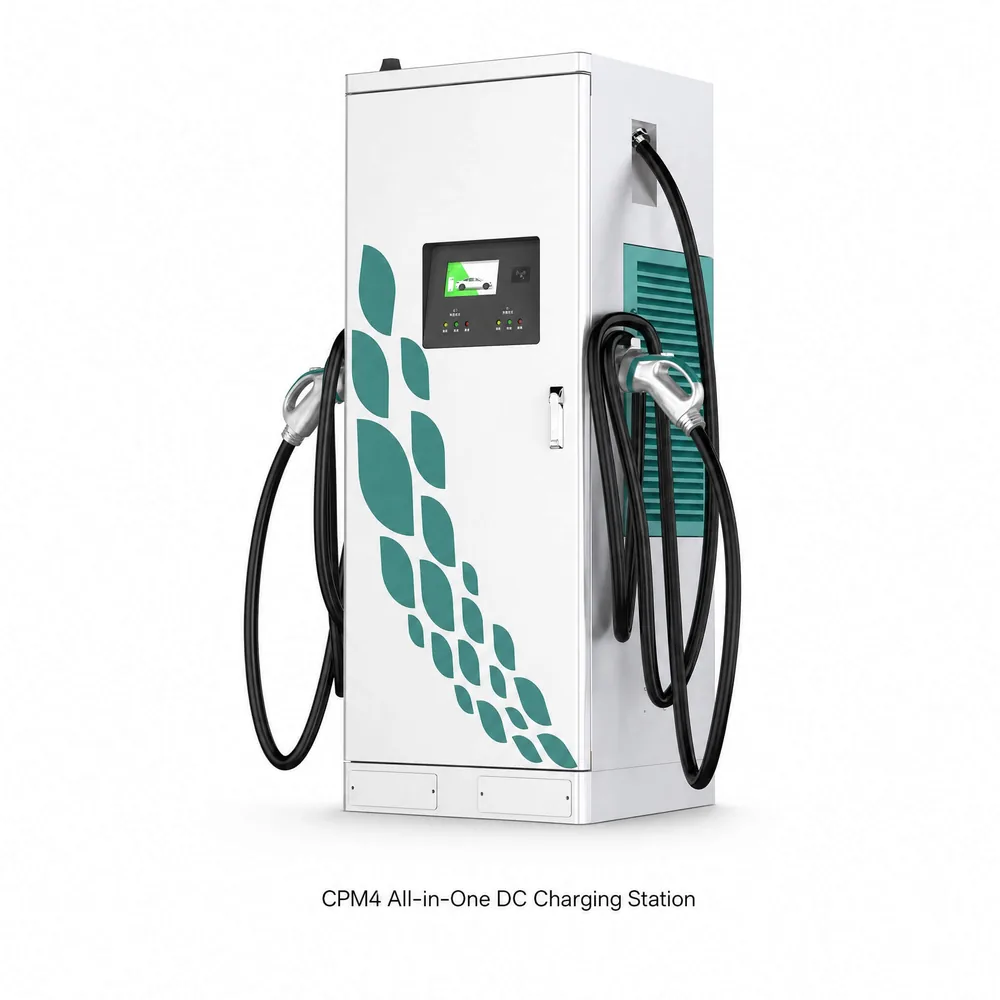
DC Fast Charging Station 60-160 kW