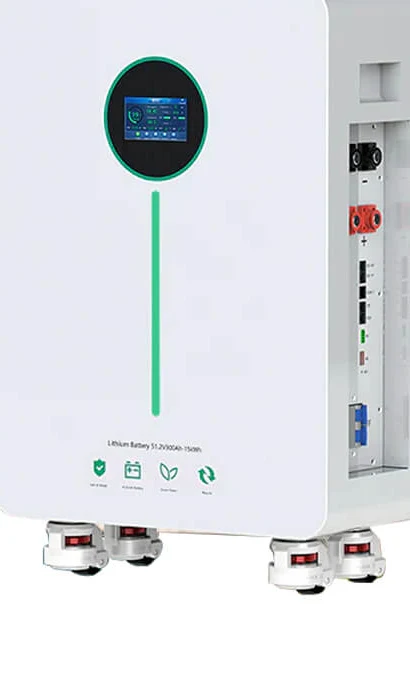
LiFePO4 vs NMC for home storage
Both chemistries work. They differ in how long they last, how they behave when abused, how much space they take and how much they cost per stored kilowatt-hour over their life.
Key takeaways
- LiFePO4 (LFP) is chosen where cycle life, thermal stability and cost per stored kWh over time matter most.
- NMC packs more energy into the same volume, which suits tight indoor plant rooms or weight-limited installs.
- LFP tolerates high states of charge and deep cycling better, which is how home batteries are actually used.
- NMC has historically performed better in cold charging conditions; check the low-temperature charge limit either way.
- BESTAR home storage is built on LiFePO4, in 5 kWh to 36 kWh configurations on a 51.2 V platform.
What actually differs
The two chemistries differ in the cathode material, and everything else follows from that.
LFP has a lower cell voltage and lower energy density, but a very stable structure that degrades slowly over many cycles.
NMC delivers higher energy density, so the same kWh occupies less volume and weighs less — at the cost of a shorter cycle life and tighter thermal management requirements.
Cycle life and cost of storage
Cycle life is the number that quietly decides whether a battery was cheap.
A home battery is typically cycled roughly once a day. Over ten years that is on the order of three to four thousand cycles, so the rated cycle life directly determines how much of the capacity you still have at the end.
The fair comparison is not the purchase price but the cost per kWh delivered over the warranted life.
Safety behaviour
Thermal stability is the reason LFP dominates stationary storage.
LFP tolerates abuse and high states of charge far better than NMC, and its thermal runaway threshold is higher. This is why stationary storage — where the pack sits inside a home — has moved to LFP.
Either chemistry must still be installed with a properly specified battery management system and protection, and to local installation rules.
Space, weight and temperature
This is where NMC still has an argument.
If the battery must fit a tight cupboard or a wall with limited area, the higher energy density of NMC is a real advantage.
Cold affects both: charging below freezing must be managed by the BMS. Check the stated low-temperature charge limit for the specific product rather than assuming.
How to choose
Match the chemistry to what the installation rewards.
Frequently asked questions
Is LiFePO4 safer than NMC?
It has better thermal stability and a higher thermal runaway threshold, which is why it is the dominant chemistry for stationary storage. Any lithium battery still needs correct installation and protection.
How many cycles should I expect?
It depends on the product and the depth of discharge. BESTAR power wall modules are specified at 8,000+ cycles; always compare the cycle figure together with its depth-of-discharge and temperature conditions.
Does a home battery work in cold climates?
Yes, but charging below freezing must be controlled by the battery management system. Check the stated low-temperature charge limit for the model you are buying.
Will an LFP battery take up more space?
For the same usable capacity, an LFP pack is usually somewhat larger and heavier than an NMC pack. In a garage or utility room this is rarely the deciding factor.
Can I expand capacity later?
On modular systems, yes — stacked and wall-mounted units can be added as modules. Confirm the expansion rules for the model, as mixing modules of different ages is not always allowed.
What sizes does BESTAR offer?
LiFePO4 home storage from 5 kWh to 36 kWh on a 51.2 V platform, in wall-mounted, stacked and all-in-one configurations, with hybrid inverter and solar input options.
Related products
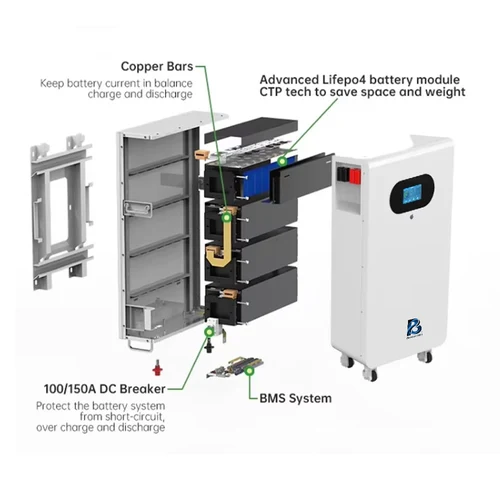
Solar Power Wall Battery 5 / 10 / 15 kWh (BS-4815)
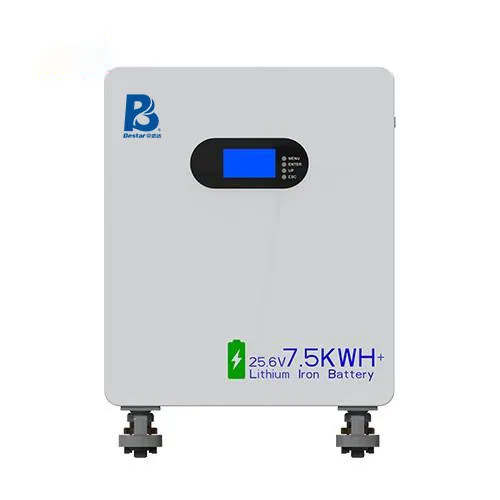
Home Energy Storage 10 / 15 kWh