7 kW vs 11 kW vs 22 kW AC wallbox
The number on the wallbox is only half the story. What you actually get is the lower of what the wallbox can deliver, what the building supply allows and what the vehicle will accept.
Key takeaways
- Charging speed is set by the weakest link: wallbox rating, site supply, and the vehicle onboard charger.
- 7 kW single-phase is the safe default where three-phase is not available at the parking space.
- 11 kW three-phase is the common European choice and matches most three-phase onboard chargers.
- 22 kW only pays off if the site has three-phase at 32 A and the vehicle accepts 22 kW on AC.
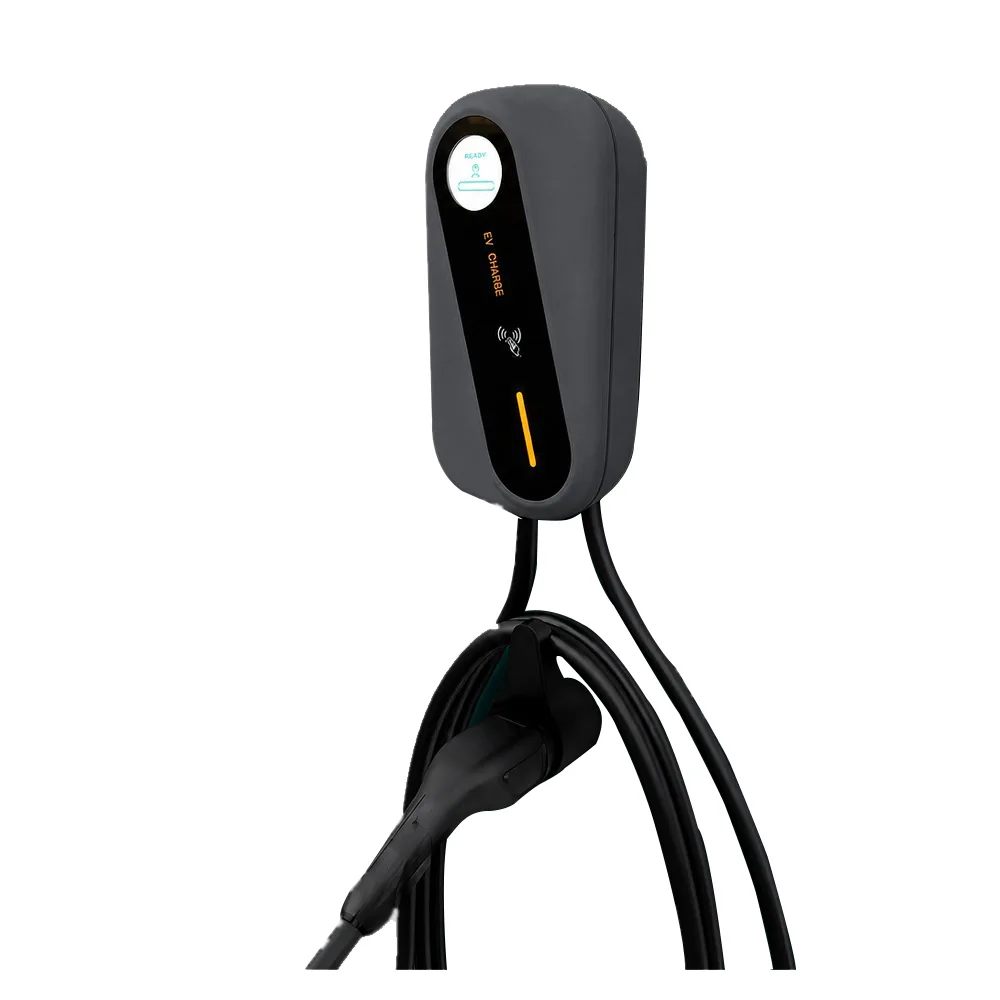
- BESTAR wallboxes are configurable for 7.4 / 11 / 22 kW with Type 1 or Type 2, RFID and OCPP 1.6J.
What the rating actually means
The kW rating is the product of voltage, current and the number of phases in use.
7 kW is single-phase at 32 A; 11 kW is three-phase at 16 A; 22 kW is three-phase at 32 A. The phase count is the part that depends on the building.
In markets where homes are supplied single-phase, a 22 kW wallbox will simply never see 22 kW.
Check the site supply first
Everything else is wasted effort if the supply cannot support the rating.
Confirm whether the parking space has single or three-phase, and the spare capacity on the main protective device. Older buildings and shared parking frequently have far less headroom than expected.
Load management — throttling the wallbox when the building load rises — is often a cheaper answer than a supply upgrade, and is worth asking for when several spaces are planned.
Check the vehicle second
The onboard charger inside the vehicle caps AC charging regardless of what the wallbox supplies.
Many vehicles accept 7 kW on single phase and 11 kW on three phase. Only a minority accept 22 kW on AC, so a 22 kW unit frequently delivers 11 kW in practice.
For overnight home and workplace parking this rarely matters: almost any AC rating finishes the job well before the vehicle is needed again.
Cable, protection and installation
Higher current means a heavier cable and a larger protective device, which shows up in the installation cost.
A 32 A three-phase run over a long distance can cost materially more than a 16 A one, and the RCD type required for EV charging must be specified correctly.
Budget the installation alongside the hardware; on difficult runs the installation can exceed the cost of the wallbox itself.
How to choose
Pick the lowest rating that comfortably finishes charging within the dwell time.
Frequently asked questions
Will a 22 kW wallbox charge my car at 22 kW?
Only if the car accepts 22 kW on AC and the site has three-phase at 32 A. Many vehicles cap AC charging at 7 kW or 11 kW, so check the vehicle specification before paying for 22 kW.
Is three-phase always better?
It is better only if the vehicle can use it. Where the supply is single-phase, a three-phase wallbox brings no benefit.
What protective device does a wallbox need?
EV charging requires the correct RCD type for DC fault currents, typically Type A with 6 mA DC detection or a Type B device, plus an over-current device sized to the rating. Your installer should confirm against local wiring rules.
Can the power be limited after installation?
On units with configurable current, yes — the rating can be set in software to match the supply, and raised later if capacity is added.
How long does a full charge take?
Roughly battery capacity divided by charging power, plus tapering near the end. A 7 kW unit adds roughly 30-40 km of range per hour on a typical passenger vehicle; 11 kW and 22 kW scale proportionally.
Does BESTAR supply all three ratings?
Yes — 7.4 / 11 / 22 kW on the same wallbox platform, with Type 1 or Type 2, RFID access and OCPP 1.6J.
Related products
Level 2 AC Wallbox 7-22 kW
Portable Mode 2 Charger